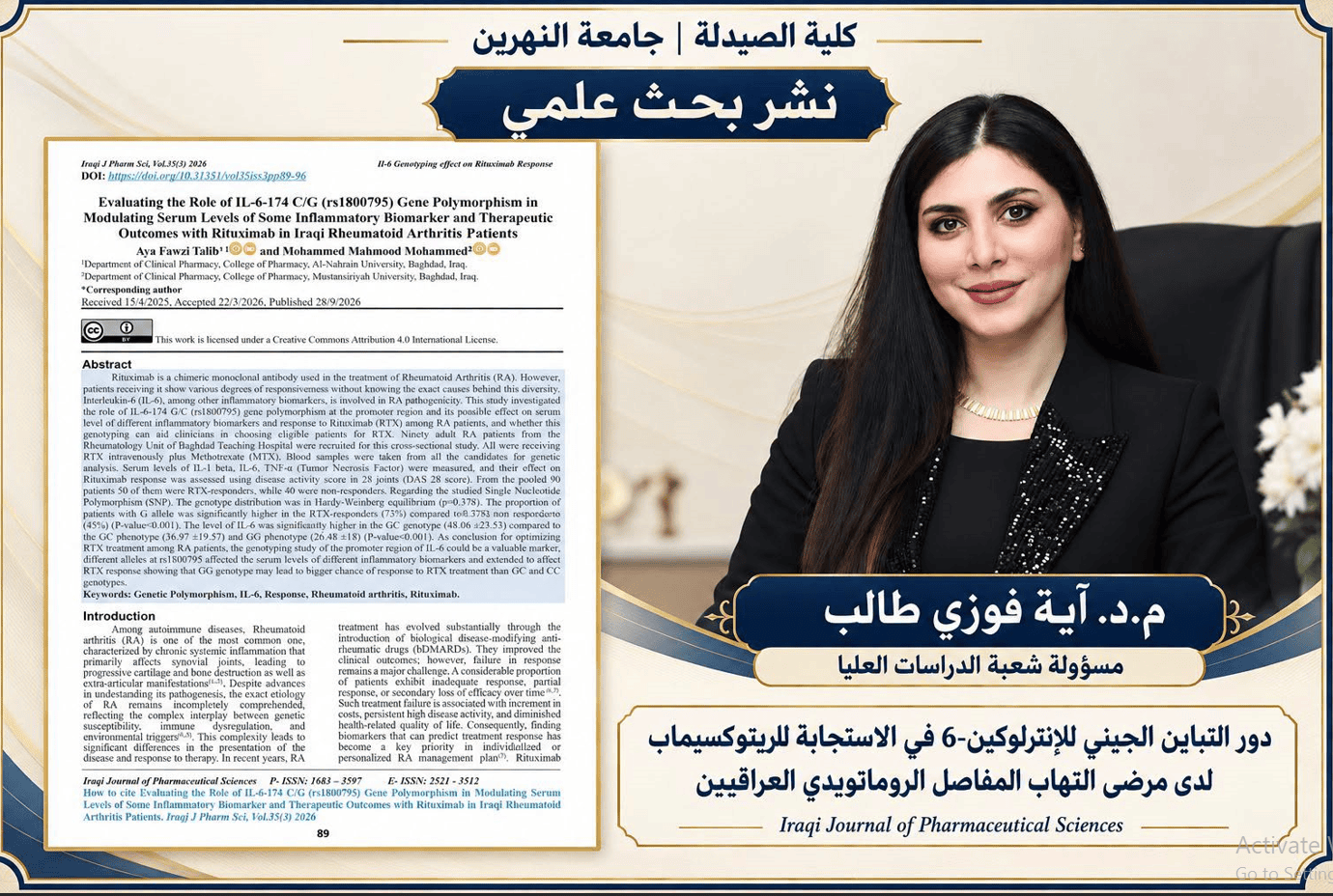
Assistant Professor Dr. Aya Fawzi Talib, Head of the Postgraduate Studies Division and a faculty member at the Clinical Pharmacy Branch, College of Pharmacy, Al-Nahrain University, has co-authored a scientific research paper published in the Iraqi Journal of Pharmaceutical Sciences, a journal ranked in the second quartile (Q2) of the Scopus database.
The research is entitled:
“Evaluating the Role of IL-6-174 C/G (rs1800795) Gene Polymorphism in Modulating Serum Levels of Some Inflammatory Biomarker and Therapeutic Outcomes with Rituximab in Iraqi Rheumatoid Arthritis Patients.”
The study aimed to investigate the influence of interleukin-6 (IL-6) gene polymorphism on inflammatory biomarker levels and the therapeutic response to rituximab among patients with rheumatoid arthritis. It also explored the potential use of genetic analysis as a supportive tool for predicting treatment response and identifying more appropriate therapeutic options for patients.
The research examined the IL-6 gene polymorphism (rs1800795) and its association with serum levels of several inflammatory biomarkers, including interleukin-6 (IL-6), interleukin-1 beta (IL-1β), and tumor necrosis factor-alpha (TNF-α). It also assessed the relationship between different genotypes and treatment efficacy, with disease activity evaluated using the Disease Activity Score in 28 joints (DAS28).
The findings suggest that investigating IL-6 gene polymorphism may represent a promising biomarker for predicting therapeutic response, potentially supporting clinical decision-making and contributing to the development of personalized treatment strategies for patients with rheumatoid arthritis. The study also highlights the need for further large-scale research to validate these findings and assess their clinical applicability.
This research contribution reflects the College of Pharmacy’s commitment at Al-Nahrain University to strengthening its academic and research presence in reputable scientific journals and supporting applied research that connects genetic and laboratory findings with modern therapeutic practices, thereby contributing to the advancement of pharmaceutical sciences and the improvement of healthcare quality.
Research Article Link:
https://doi.org/10.31351/vol35iss3pp89-96
Views: 0